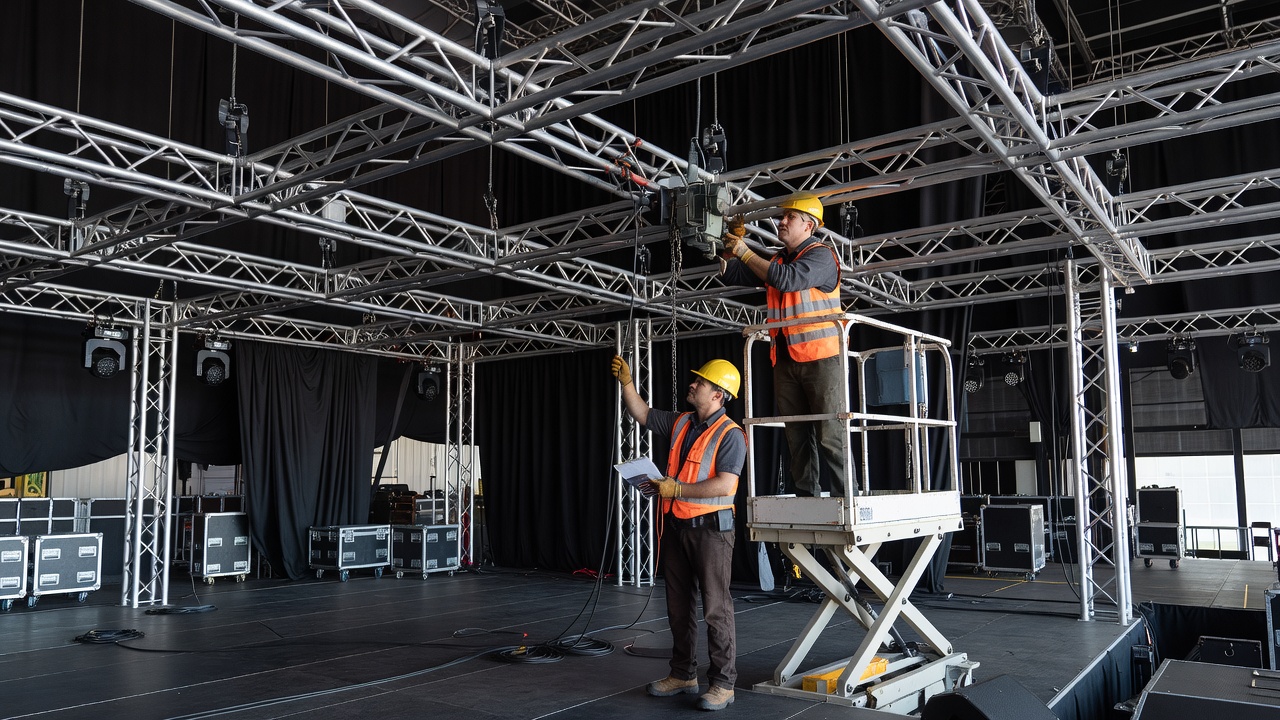
Suspending heavy automated moving heads, LED video walls, and secondary power distros over performers and audiences demands rigorous mechanical engineering calculations. A standard 10:1 safety factor is mandatory across all temporary overhead rigging components.
1. Bridle Vector Physics & Leg Angle Tension
When suspending a motor point between two I-beams using a two-leg cable bridle, wide leg angles dramatically increase tension forces. At a 120° apex angle, the tension in each bridle leg equals 100% of the total suspended load weight rather than 50%.
2. Dynamic Shock Load Factors
Electric chain hoists do not start or stop instantaneously. Accelerating or decelerating a 2,000 kg truss grid introduces dynamic shock loads. Riggers must apply a minimum dynamic load factor multiplier of 1.25x to 1.5x on static weight calculations prior to motor selection.
3. Pre-Rigging Inspection Protocols
- Inspect all steel wire rope slings for broken strands or kinking.
- Verify grade 80 or grade 100 alloy steel shackles are properly moused or nut-and-cotter pinned.
- Measure total truss span deflection limits to ensure deflection does not exceed 1/300th of total span length.