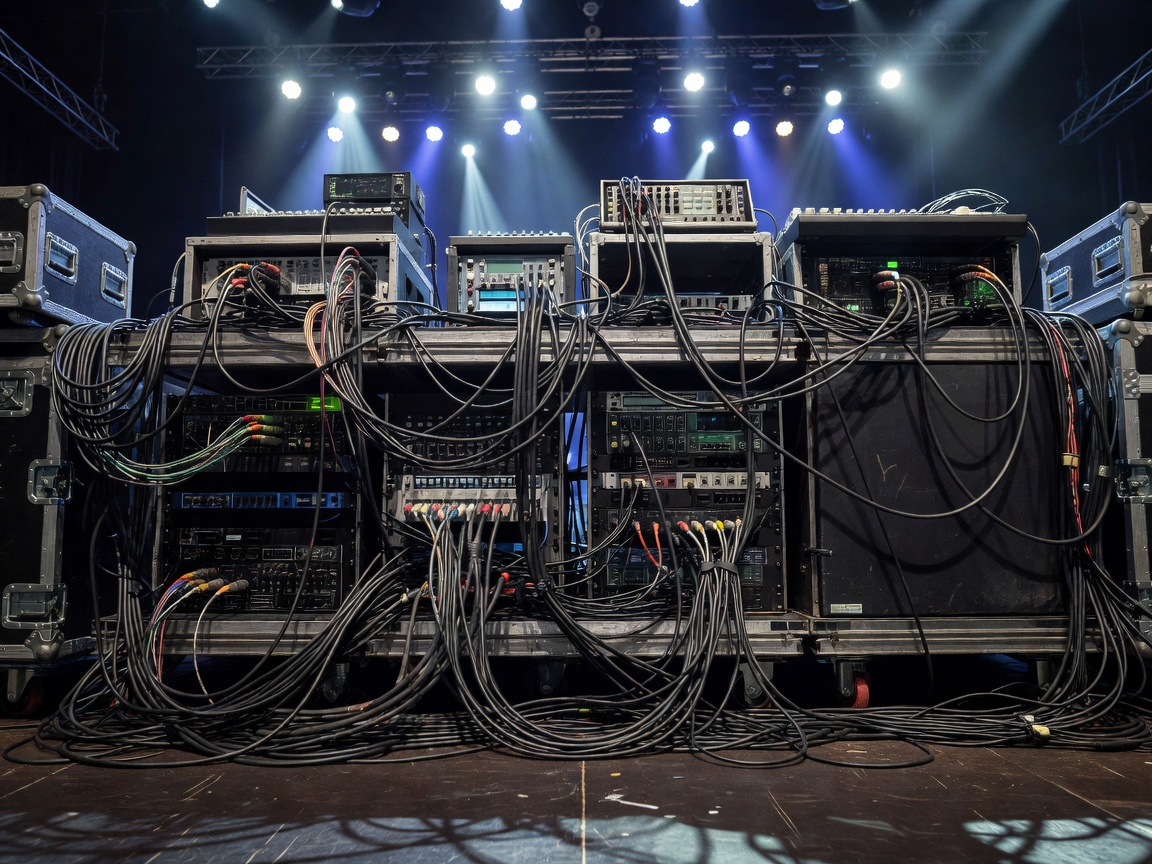
As stadium lightshows scale beyond 100 DMX universes, traditional point-to-point RS-485 copper cables are replaced by Gigabit Ethernet trunks. Choosing between Architecture for Control Networks (sACN - ANSI E1.31) and Art-Net 4 dictates network switch topology, multicast IGMP snooping configuration, and backup console priority routing.
1. Multicast Transmission vs Unicast Broadcast
Art-Net traditionally operates on a broadcast or unicast model over UDP port 6454. While unicast is efficient for small rigs, directing individual universe streams to hundreds of node IP addresses creates heavy network overhead on control desks.
In contrast, sACN utilizes standardized IPv4 multicast addressing (239.255.0.0/16). Node interfaces subscribe only to the specific universe addresses they require. Managed switches equipped with IGMP v2/v3 snooping ensure that video pixel-mapping data is directed exclusively to target ports without flooding unrelated stage racks.
2. Priority Architecture and Tracking Backup
sACN includes native universe priority tagging (values 0–200). If a primary lighting console crashes, a secondary tracking console emitting the same sACN universes at priority 110 seamlessly overrides the primary console (priority 100) without hardware DMX A/B switches.
3. Summary & Deployment Recommendation
- Choose sACN: For large touring rigs, festival stages with multiple guest consoles, and heavy multicast pixel-mapping fixtures.
- Choose Art-Net 4: For legacy node compatibility, direct RDM device discovery, and smaller venue installations.